
Speaker Portfolio
Globally Renowned Speaker at Various International Forums
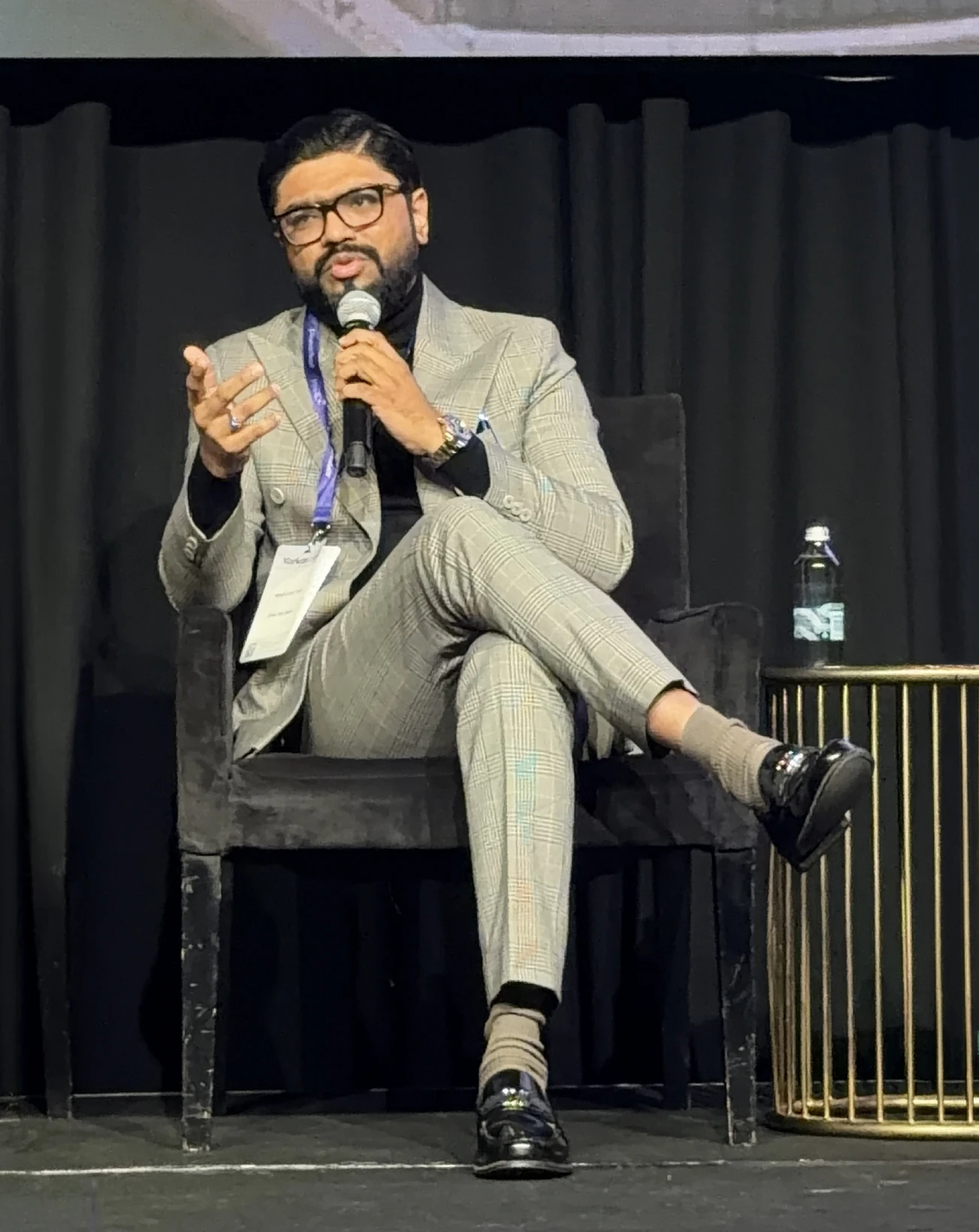
Keynote Opening Panel at 5th Annual Private Wealth Australia Forum 2026
Advocate CA Harsh Girish Patel, Founder & Global CEO of Water & Shark, joined the keynote opening panel at the 5th Annual Private Wealth Australia Forum 2026, hosted by Markets Group in Australia.
He participated in the discussion on “Navigating Macroeconomic Shifts for Local & Global Portfolios,” alongside leading voices from the private wealth and investment management industry. The session explored how investors, family offices and wealth leaders are responding to inflation, geopolitical uncertainty, energy transition, private markets and evolving global capital allocation strategies.
During the panel, Harsh Patel highlighted the importance of building wealth strategies that go beyond investment performance. He emphasised that enduring legacies require robust wealth protection, preservation, governance and cross-border structuring frameworks, especially in an increasingly interconnected global economy.
His perspective positioned private wealth planning as a strategic discipline where capital preservation, risk management and long-term legacy creation must move together. The engagement reinforced his thought leadership in global private wealth, family office advisory and cross-border wealth structuring.
Harsh Patel Address at UK India Leaders Conference 2026
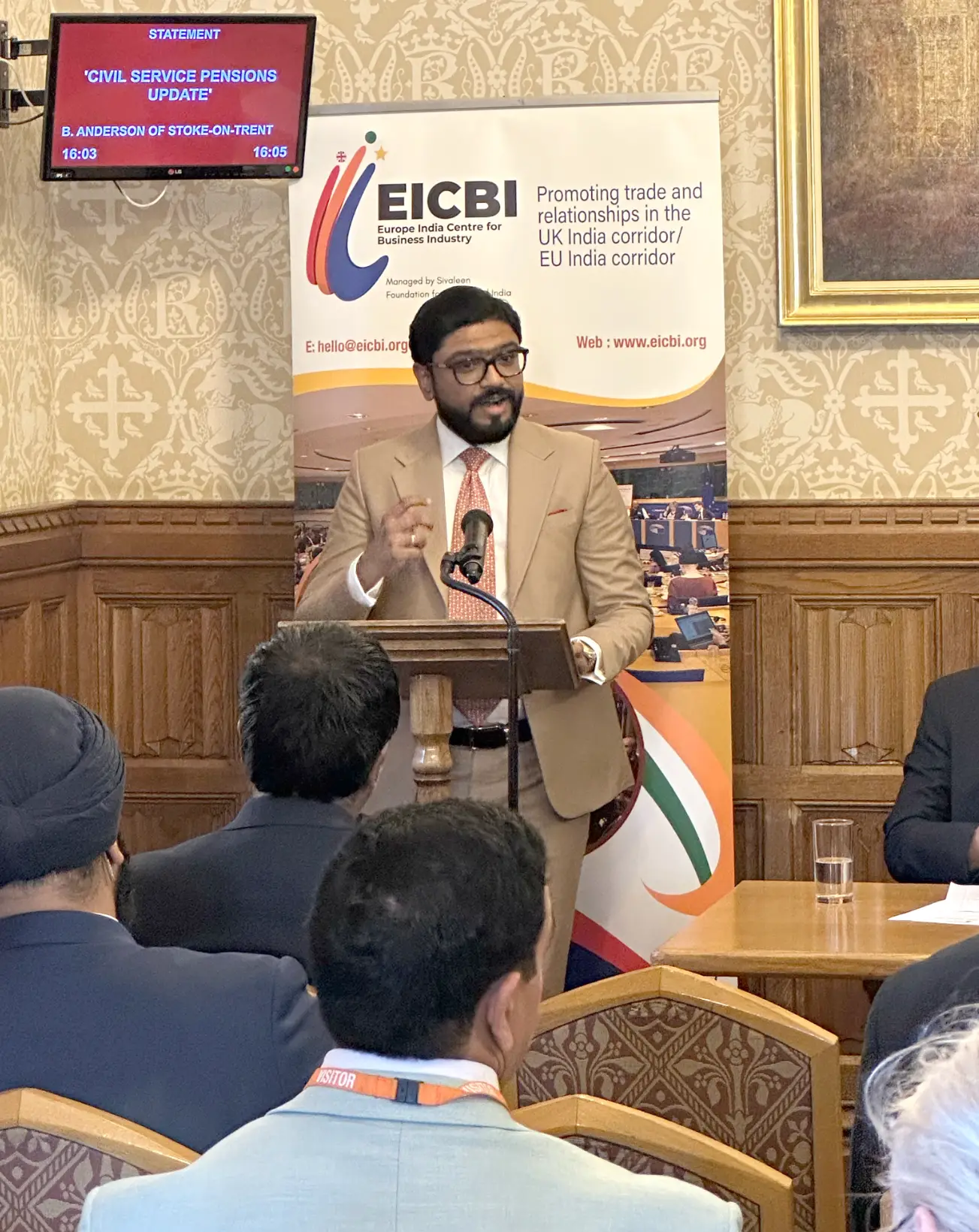
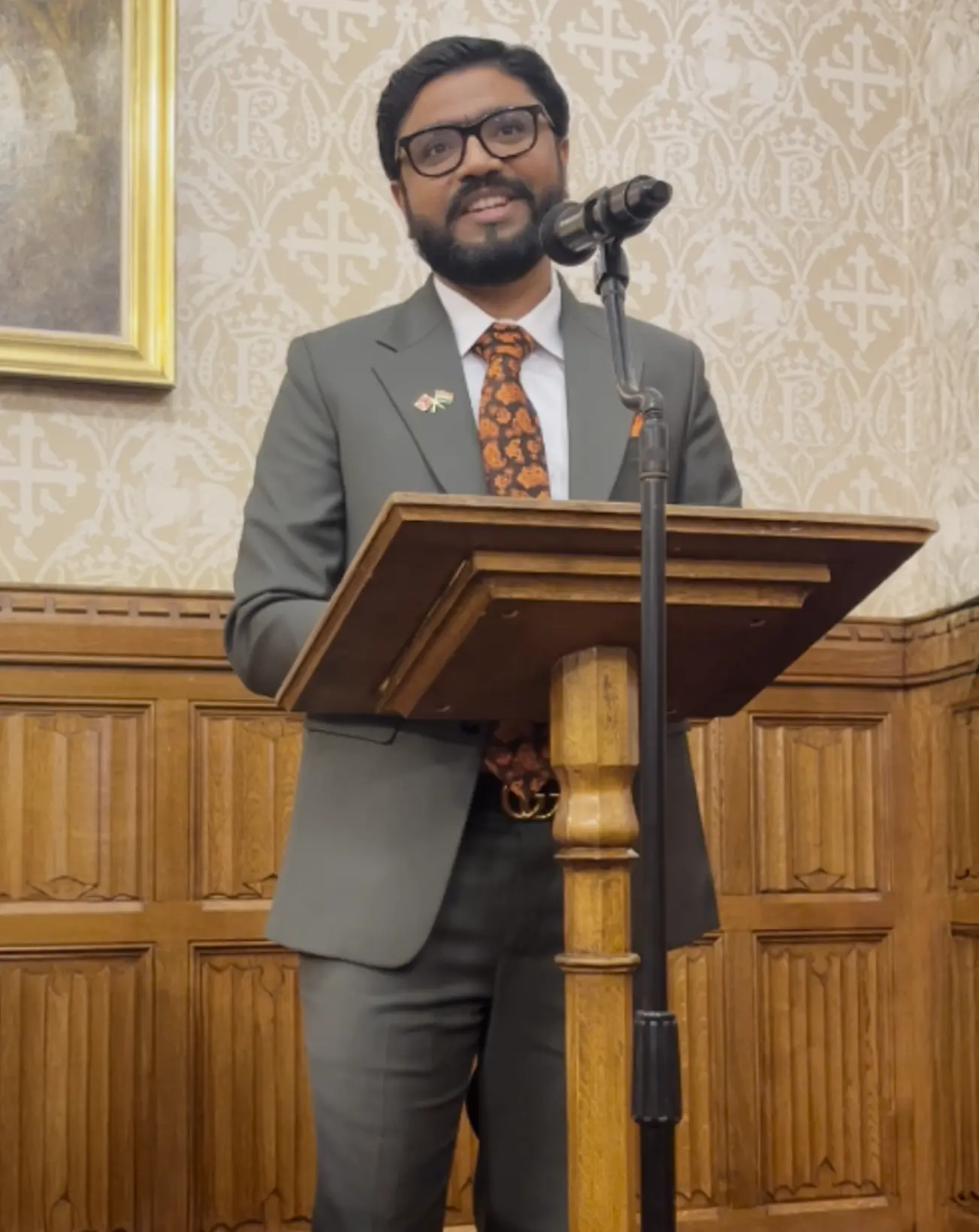
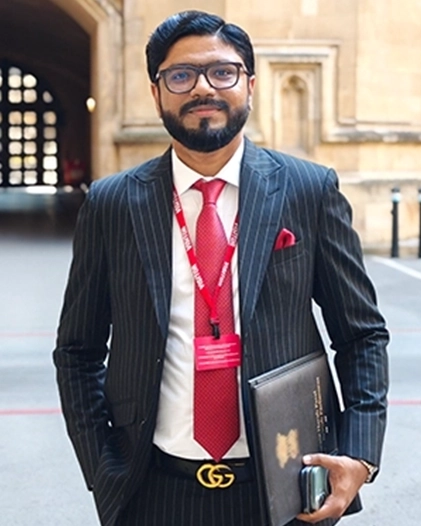
Advocate CA Harsh Girish Patel, Founder & Global CEO of Water & Shark, delivered a keynote address at the UK India Leaders Conference 2026, held at the House of Lords, UK Parliament, London.
His address focused on the strategic significance of the UK India CETA and its role in shaping the next phase of bilateral economic cooperation between India and the United Kingdom. He emphasised that the agreement must be viewed beyond tariff reduction, as a strategic framework for building cross-border corridors across defence, supply chains, finance, technology, pharmaceuticals and professional services.
During the engagement, he highlighted the importance of business readiness, regulatory preparedness and execution led partnerships in converting policy commitments into real commercial outcomes. He positioned the UK India CETA as a long-term economic corridor between two democracies, two common-law systems and two complementary economies committed to trust, reliability and shared growth.
The engagement also marked the preview unveiling of Water & Shark’s strategic report, “UK India CETA: From Agreement to Business Readiness,” developed in association with EICBI, providing a practical intelligence blueprint for businesses, investors and institutions seeking to leverage the agreement.
Harsh Patel Addresses MSME Global Growth Strategy at Maharashtra MSME Summit 2026
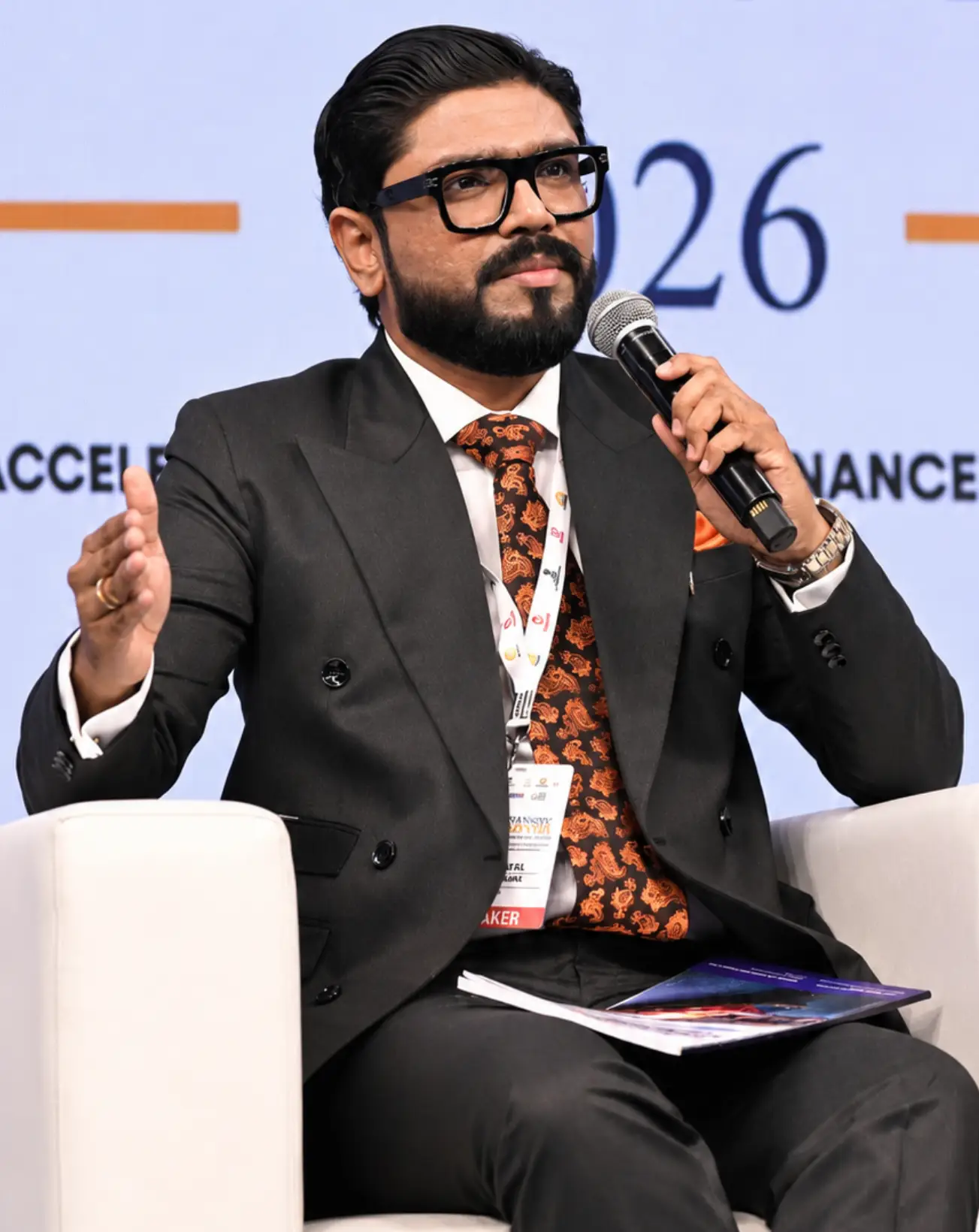
Advocate CA Harsh Girish Patel, Founder & Global CEO of Water & Shark, was invited as an expert speaker at the Maharashtra MSME Growth Summit & Awards 2026, held on 27th June 2026, the occasion of World MSME Day.
He joined the panel discussion on “Expanding Global Footprint: Policies, FTAs & MSME Growth Strategy,” where he shared strategic insights on how Indian MSMEs can scale beyond domestic markets by leveraging Free Trade Agreements, strengthening compliance readiness, building export capability, and positioning themselves for long-term global competitiveness.
During his address, he presented a clear framework for India’s next phase of global growth built on Confidence, Capability and Consistency. He emphasised that Indian MSMEs must move beyond cost-based competition and build for quality, value creation, international credibility and strategic market presence.
His remarks also highlighted the importance of understanding global trade corridors, policy frameworks, regulatory expectations, and cross-border structures as Indian enterprises prepare to become serious global players.
Private Wealth and Real Estate: Harsh Patel at the Singapore Forum
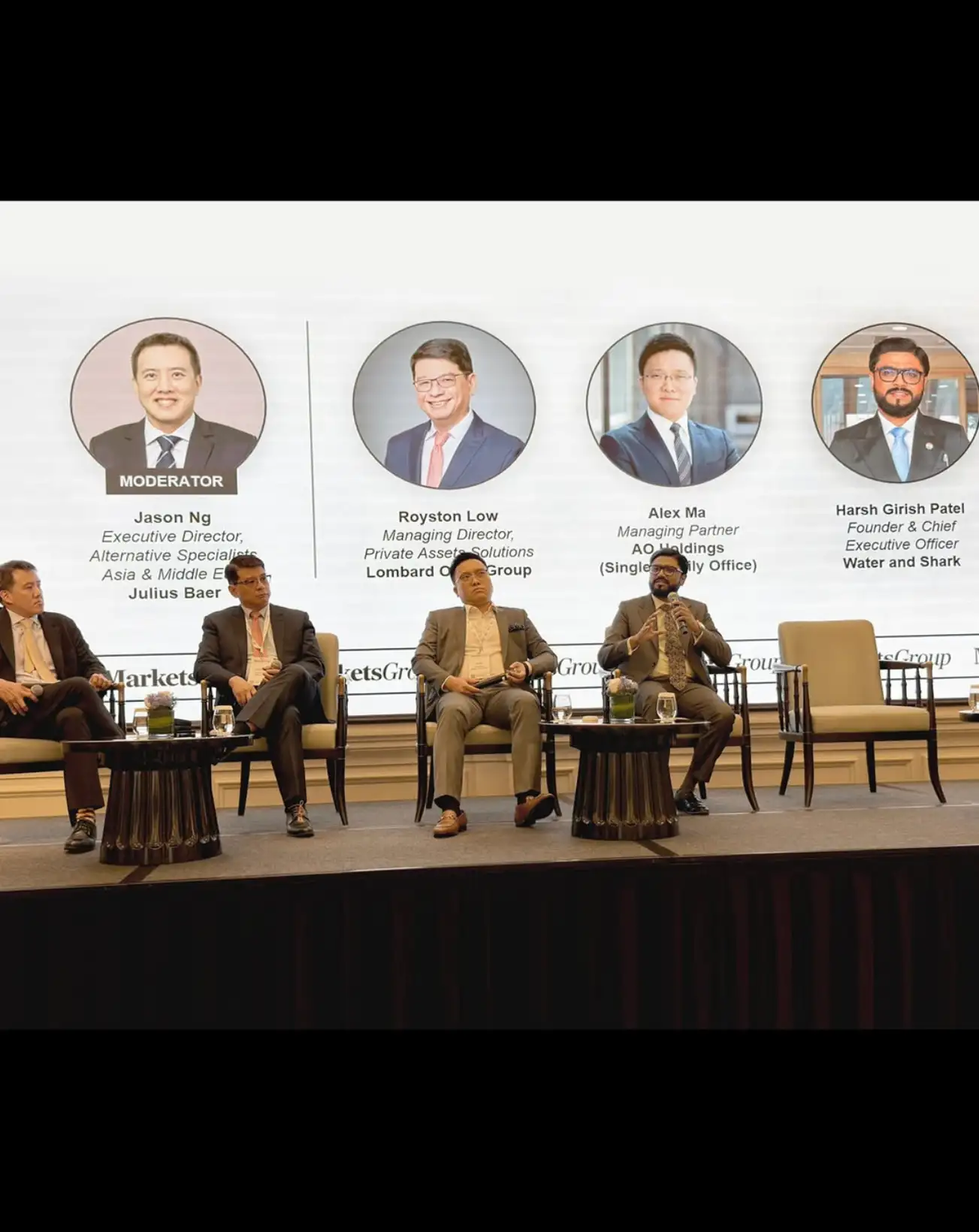
At the 7th Annual Private Wealth Asia Singapore Forum, Advocate CA Harsh Patel shared his perspectives on real estate as a strategic driver of wealth creation, capital deployment, and long-term asset ownership across the UAE and West Asia.
He highlighted how global families, investors, and private clients are increasingly looking at real estate beyond traditional acquisition and return generation. Today, real estate has become a core pillar of wealth preservation, portfolio diversification, legacy planning, and cross-border asset strategy.
His remarks focused on the critical legal, regulatory, tax, protection, and succession frameworks that must support high-value real estate ownership, especially when families, assets, and business interests are spread across multiple jurisdictions.
He emphasised that as private wealth becomes more global, real estate structuring must be approached with greater depth. Ownership design, asset protection, inheritance planning, family governance, tax efficiency, financing alignment, and cross-border continuity must work together as one integrated framework.
Without the right preservation architecture, wealth creation can quickly turn into legal, tax, regulatory, and succession exposure. The session reinforced a key principle for modern private wealth planning: real estate can create wealth, but only structured ownership can preserve it.
Long-term resilience is built when capital, governance, legal protection, and succession planning move in the same direction.
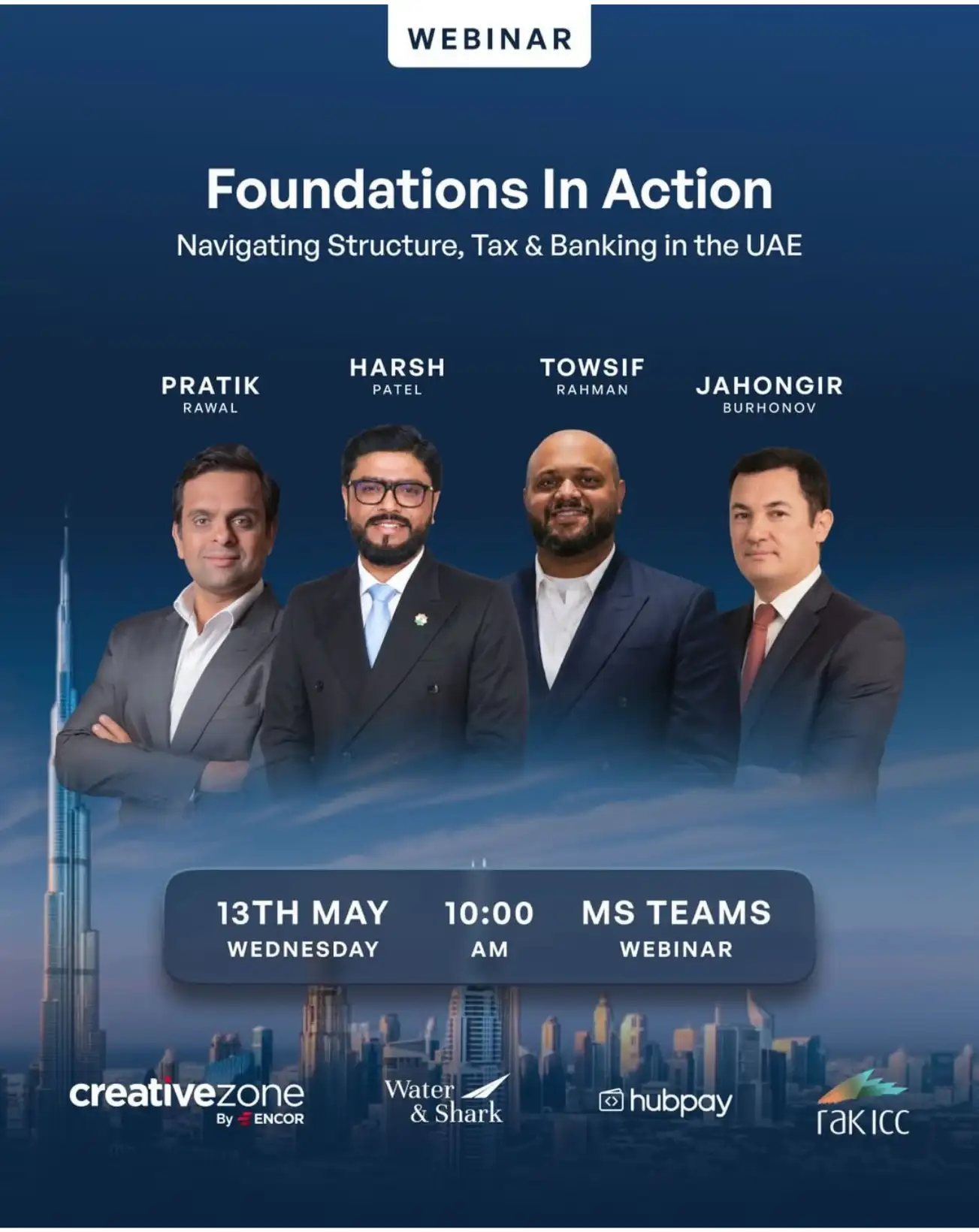
Foundations in Action: Structuring Wealth in the UAE
At the RAK ICC forum titled “Foundations in Action: Navigating Structure, Tax & Banking in the UAE,” Advocate CA Harsh Patel shared his perspectives on the growing relevance of RAK ICC foundations as strategic vehicles for family succession, asset protection, and private wealth structuring across the Middle East.
He highlighted that international families, entrepreneurs, and private clients are increasingly moving towards structured ownership models to preserve wealth, strengthen control, and build continuity across jurisdictions and generations. In today’s global wealth environment, holding assets is no longer enough. Families must design frameworks that can support governance, tax efficiency, banking access, succession planning, and long-term protection.
His remarks focused on the practical role of foundations in creating a more disciplined wealth architecture, where legal design, tax planning, banking alignment, family governance, and asset protection work together as one integrated framework.
He further emphasised that well-structured foundations can help families separate ownership from management, protect assets from fragmentation, support succession objectives, and create greater clarity for future generations.
The session reinforced a clear principle: long-term wealth preservation is not driven by ownership alone. It is driven by structure, governance, control, and continuity.
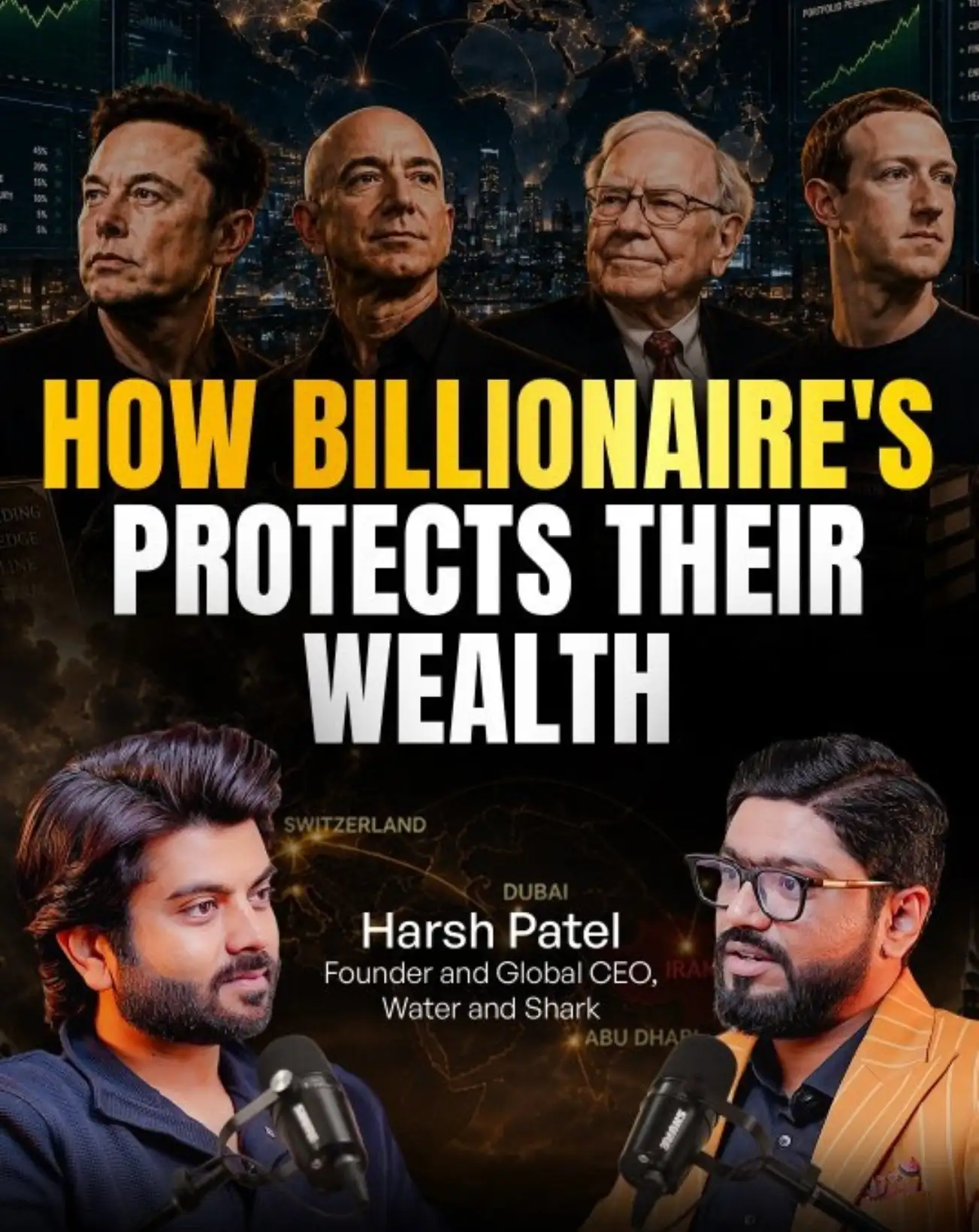
Wealth, Identity, and Structure: Advocate CA Harsh Patel in Conversation with Jay Thadeshwar
In his podcast conversation with Jay Thadeshwar, Advocate CA Harsh Patel reflected on his journey from India to building Water & Shark as a global advisory platform, while sharing deeper perspectives on Indian values, Gujarati identity, entrepreneurship, wealth creation, wealth preservation, geopolitics, and the responsibilities that come with success.
He spoke about how Indian families, entrepreneurs, and business owners are entering a defining phase where wealth is expanding, global exposure is increasing, and succession planning can no longer remain informal or reactive. His remarks focused on the need to move beyond asset accumulation and create strong structures around ownership, governance, control, protection, tax alignment, and intergenerational continuity.
The conversation also explored the mindset required to build global institutions from India. He highlighted that international growth should not come at the cost of cultural roots, family values, or personal identity. For Indian entrepreneurs and families, the real mandate is not only to protect capital, but also to preserve the principles, discipline, relationships, and heritage that shaped their journey.
He further emphasised that wealth without structure can create exposure, and success without continuity can lose its long-term meaning. As Indian wealth becomes more global, families must think strategically about how prosperity, values, decision-making, and responsibility are transferred to the next generation.
The episode reinforced a clear principle for modern Indian wealth: legacy is not created by wealth alone. It is built through structure, purpose, governance, identity, and the ability to preserve both prosperity and values across generations.
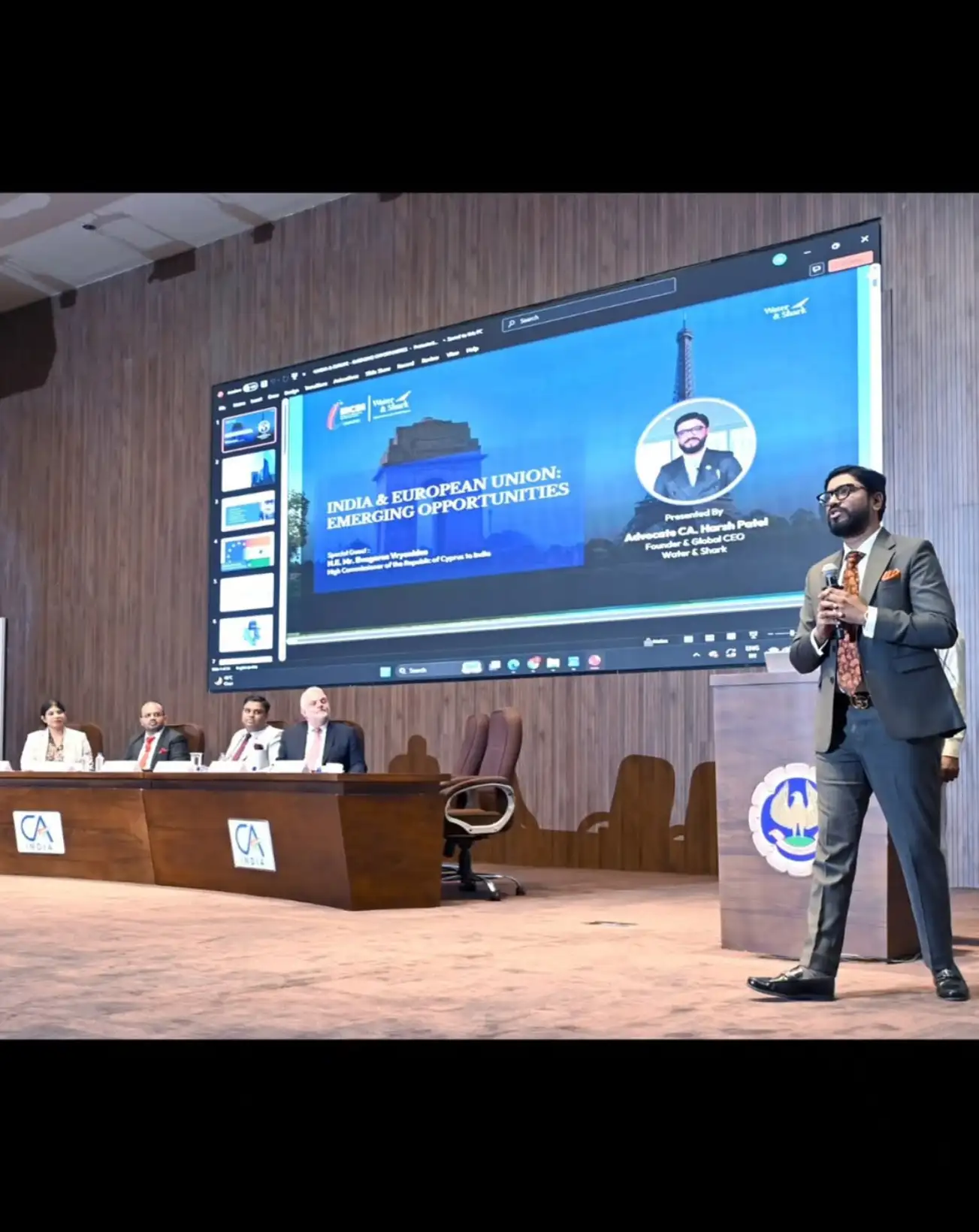
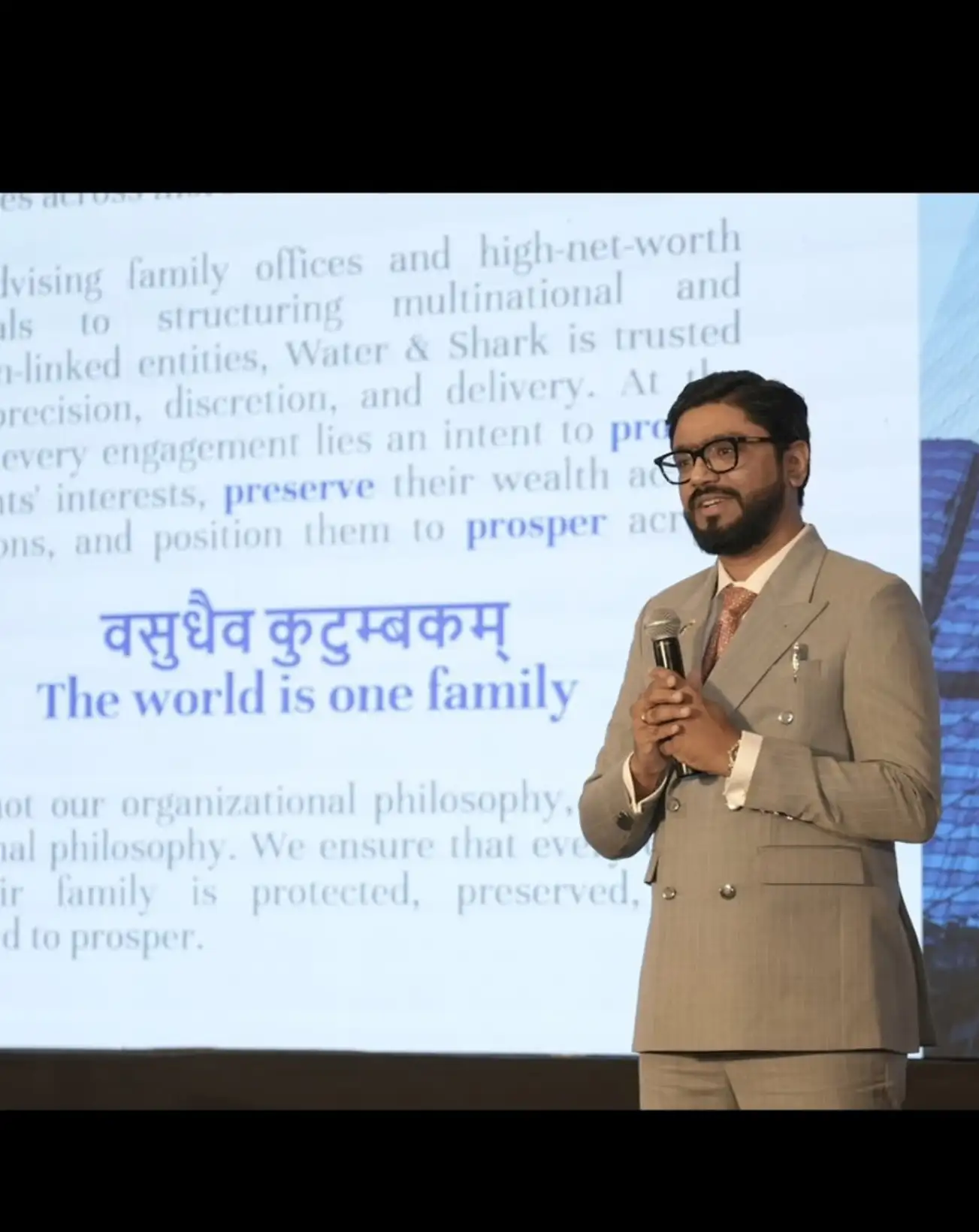
From Outsourcing to Global Advisory: Harsh Patel at ICAI Ahmedabad
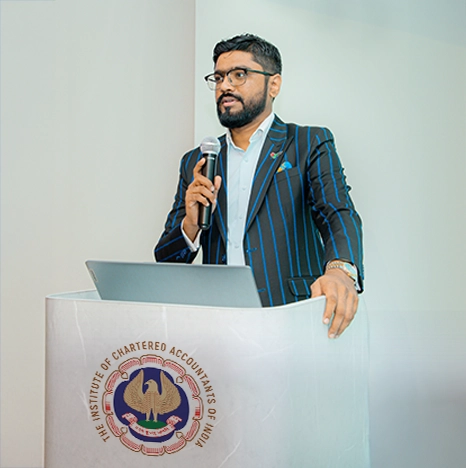
At the Ahmedabad Branch of WIRC of ICAI, Advocate CA Harsh Patel addressed fellow Chartered Accountants on the evolving future of the profession and the mindset shift required for Indian professionals to compete in global markets.
He highlighted that the profession is moving beyond traditional KPO and BPO-led delivery models into a more advanced, capability-driven advisory ecosystem. In his view, the next growth phase for Chartered Accountants will not be built on volume execution alone, but on their ability to deliver strategic insight, cross-border structuring, regulatory clarity, governance support, and high-quality advisory outcomes for international clients.
His remarks focused on the growing opportunity for Indian professionals to support businesses expanding into global markets, particularly as the India-Europe economic corridor continues to gain momentum through deeper trade, investment, and FTA-led engagement.
He emphasised that Chartered Accountants must now build stronger expertise across tax, law, compliance, governance, risk management, jurisdiction-specific execution, and international business structuring. Technical knowledge will remain essential, but global relevance will depend on commercial judgment, institutional credibility, and execution depth.
The session reinforced a clear message for the profession: the future will belong to Chartered Accountants who move beyond compliance delivery and position themselves as global advisors. India has the talent. The next mandate is to build the capability, confidence, and global perspective required to lead.
Structuring the India-Europe Corridor: Harsh Patel on the Cyprus Presidency Dialogue
At a diplomatic engagement in Ahmedabad aligned with the Cyprus Presidency of the Council of the European Union, Advocate CA Harsh Patel shared his perspective on the growing strategic importance of the India-Europe economic corridor and the opportunities it presents for Indian businesses, professionals, and cross-border enterprises.
He highlighted that Indian enterprises are entering a new phase of global expansion, with strong potential across sectors such as gems and jewellery, chemicals, textiles, automobiles, legal advisory, financial services, accounting, and technology-enabled services. His address focused on the need to view Europe not simply as an export market, but as a sophisticated jurisdictional ecosystem that demands regulatory readiness, tax clarity, governance discipline, and long-term structuring.
He emphasised that successful expansion into Europe requires more than ambition or market access. Indian businesses must build the right legal, tax, operational, and commercial frameworks before scaling across borders. This includes compliant ownership structures, risk protection, financing alignment, documentation strength, and jurisdiction-specific planning.
His remarks also underlined that the India-Europe corridor is no longer limited to trade. It is evolving into a broader platform for investment, advisory, innovation, professional mobility, and institutional cooperation. For Indian businesses, the real opportunity lies in moving from transactional exports to structured global growth.
The engagement reinforced a clear principle: global opportunity must be matched with strategic preparedness. Sustainable India-Europe expansion will be led by those who can structure with precision, scale with discipline, and build for long-term continuity.
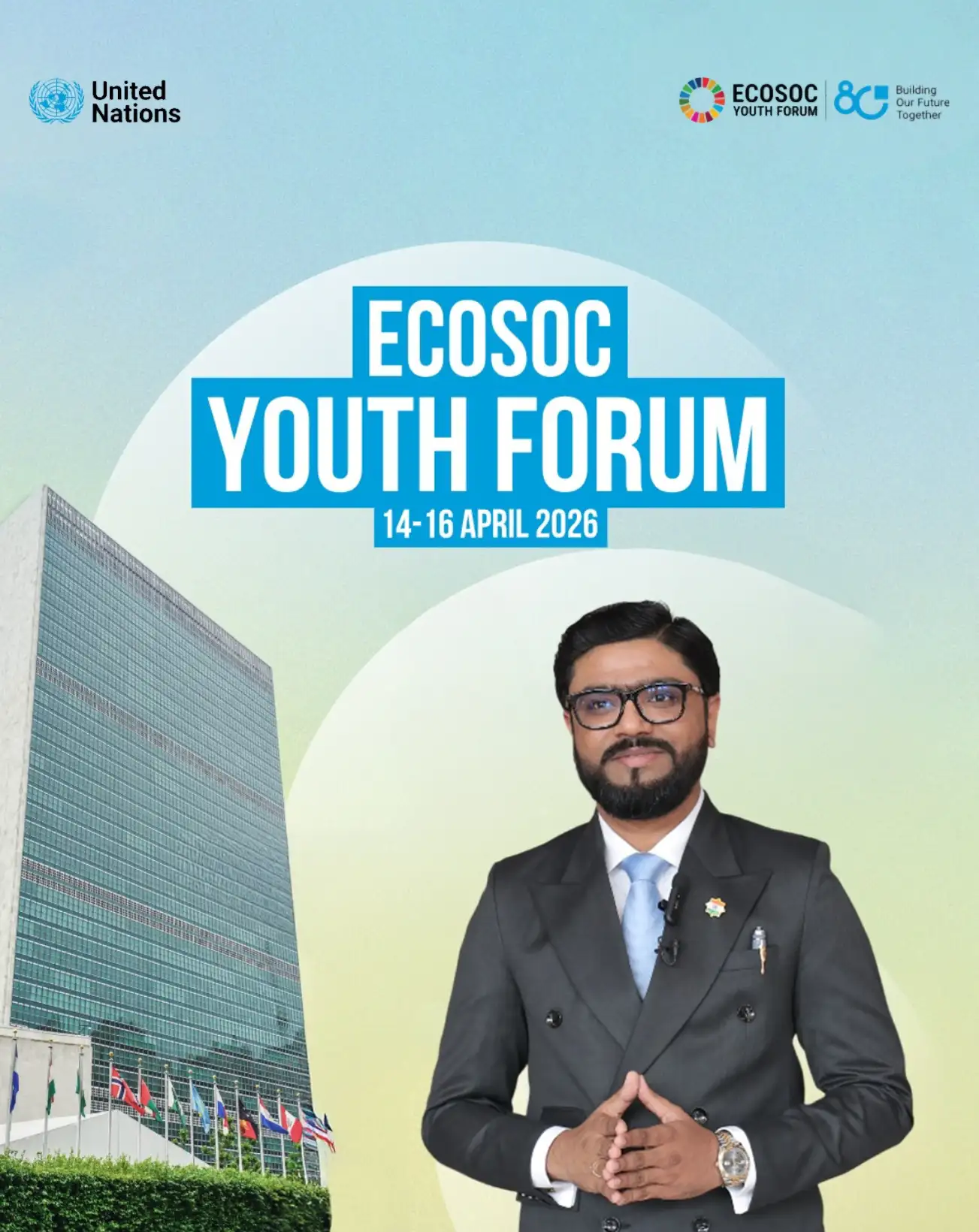
India at the Global Table: United Nations ECOSOC Youth Forum 2026
Advocate CA Harsh Patel received an invitation from the United Nations to participate in the United Nations Economic and Social Council Youth Forum 2026 at the UN Headquarters in New York.
The invitation came at a critical time, as the world continues to face geopolitical instability, conflict, economic uncertainty, and deep social challenges across regions. For him, this engagement represented an opportunity to contribute to global conversations with member states, policymakers, youth leaders, and institutions on the economic and social priorities shaping the future.
His participation reflects the growing role of young Indian professionals in international dialogue, especially across development, governance, institutional cooperation, peace-building, and human dignity. It also highlights how Indian leadership is increasingly being recognised in platforms that influence global policy thinking and collective action.
He viewed the invitation not only as a personal milestone, but as a responsibility to represent India’s voice, values, and forward-looking perspective on the global stage.
The engagement reinforced a clear principle: economic and social progress cannot be separated from peace, responsibility, and the protection of human life. In a world facing uncertainty, progress must be built with dignity at its centre.
Education and the Architecture of Legacy: Harsh Patel at the House of Lords
At the House of Lords in London, on the occasion of the UN International Day of Education, Advocate CA Harsh Patel addressed a special session on “The Role of Education in the Great Wealth Transfer: Protection, Preservation & Cross-Border Continuity.”
The engagement, co-hosted by Water & Shark and Europe India Centre for Business and Industry, brought together global perspectives on education, legacy planning, wealth transition, and long-term continuity.
He shared his perspective on the structural realities behind the estimated $100 trillion global wealth transfer, highlighting that true legacy is not measured only by the capital passed on to the next generation. It is defined by the transfer of knowledge, judgment, discipline, governance, and responsibility.
His address focused on the need for families, institutions, and wealth creators to view education as a core pillar of wealth preservation. As assets, businesses, citizenships, and family interests increasingly move across jurisdictions, the next generation must be equipped not only to inherit wealth, but to understand, protect, govern, and sustain it.
He emphasised that education and wealth structuring must operate together. Without capability, even substantial wealth can face fragmentation, disputes, regulatory exposure, and loss of purpose. With the right education, governance, and cross-border planning, wealth can become a platform for continuity, impact, and intergenerational resilience.
The session reinforced a clear principle: legacy is not built only through what is accumulated. It is built through what is taught, transferred, protected, and sustained across generations.
The End of Passive Wealth: Harsh Patel at unDavos
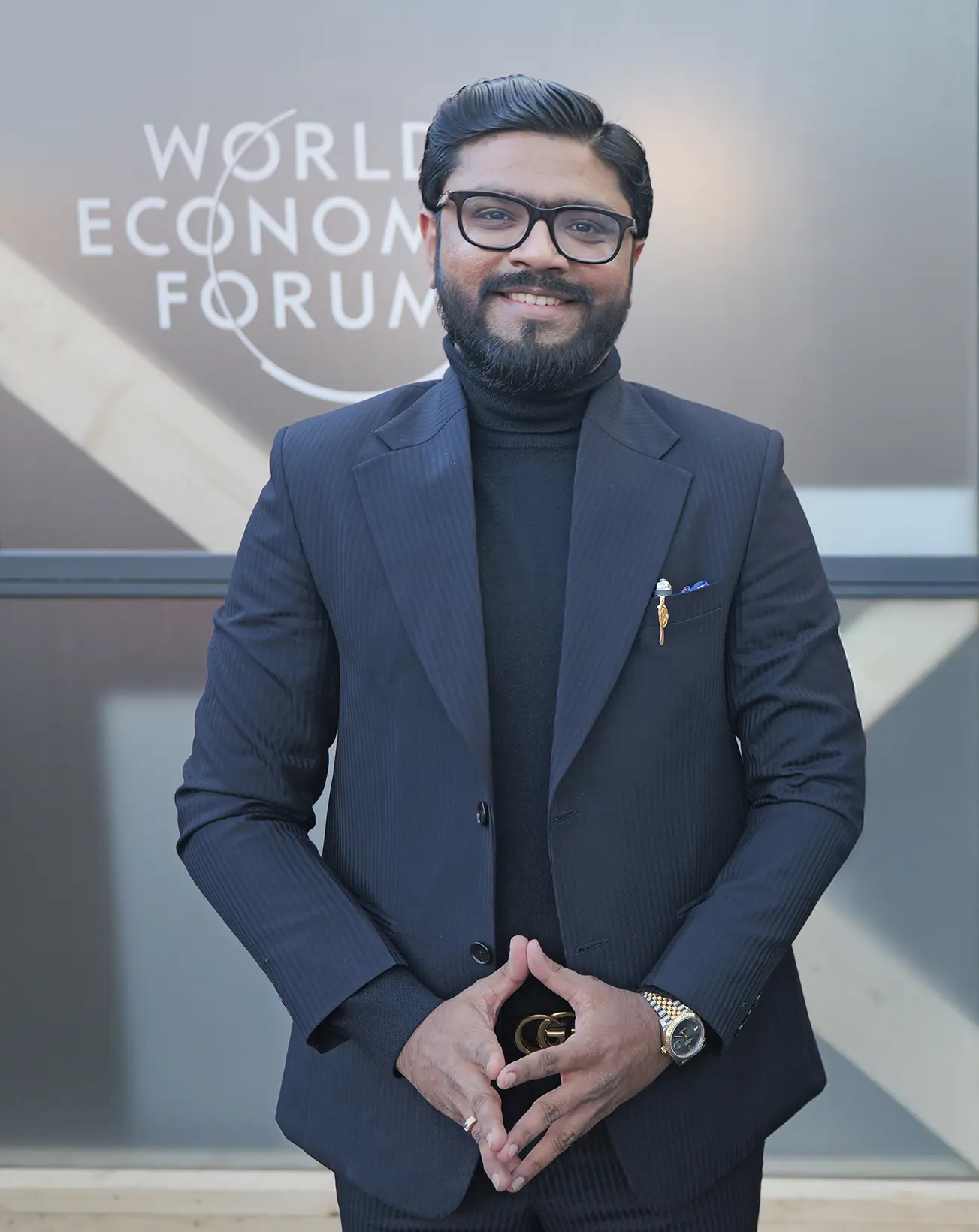
At unDavos, during the World Economic Forum Annual Meeting 2026 in Davos (19–23 January 2026), Harsh Patel addressed a closed group of global investors, policymakers, and operators shaping the next phase of capital deployment.
Speaking on “Next Gen Wealth: From Passive to Proactive Investment,” Patel challenged the persistence of passive wealth models in an environment defined by geopolitical fragmentation, regulatory tightening, and accelerated capital mobility. He argued that wealth today must be actively structured, jurisdictionally aware, and governance led not merely allocated.
His intervention focused on execution: how families and institutions must reposition from asset holders to capital architects, integrating cross-border structuring, control mechanisms, and strategic flexibility into their portfolios. The emphasis was clear returns without control are no longer sufficient in a world where risk is systemic and borders are fluid.
The session reinforced a defining reality: those who succeed will not be those who follow markets, but those who structure ahead of them.
Wealth, Control, and Continuity: Harsh Patel at ICAI Dubai
At the ICAI Dubai Chapter Knowledge Session in Dubai, Advocate CA Harsh Patel delivered a keynote on “Estate Planning & Asset Protection: Global Perspective,” sharing his insights on the structural realities of preserving wealth in an increasingly complex, mobile, and borderless world.
He positioned estate planning not as a one-time documentation exercise, but as a strategic framework for control, continuity, protection, and long-term family resilience. His address focused on how global families, entrepreneurs, and private clients must think beyond asset ownership and build structures that can withstand regulatory change, cross-border exposure, inheritance challenges, and intergenerational transition.
He highlighted that modern wealth preservation requires an integrated approach, bringing together trusts, holding structures, family governance, succession planning, tax alignment, asset protection, and mobility provisions into one coherent architecture. In a world where families, citizenships, businesses, and assets often span multiple jurisdictions, fragmented planning can quickly create legal, tax, and succession risks.
The session reinforced a clear principle: wealth is not preserved by instruments alone. It is preserved through systems that protect control, enable continuity, and remain resilient across jurisdictions, generations, and uncertainty.
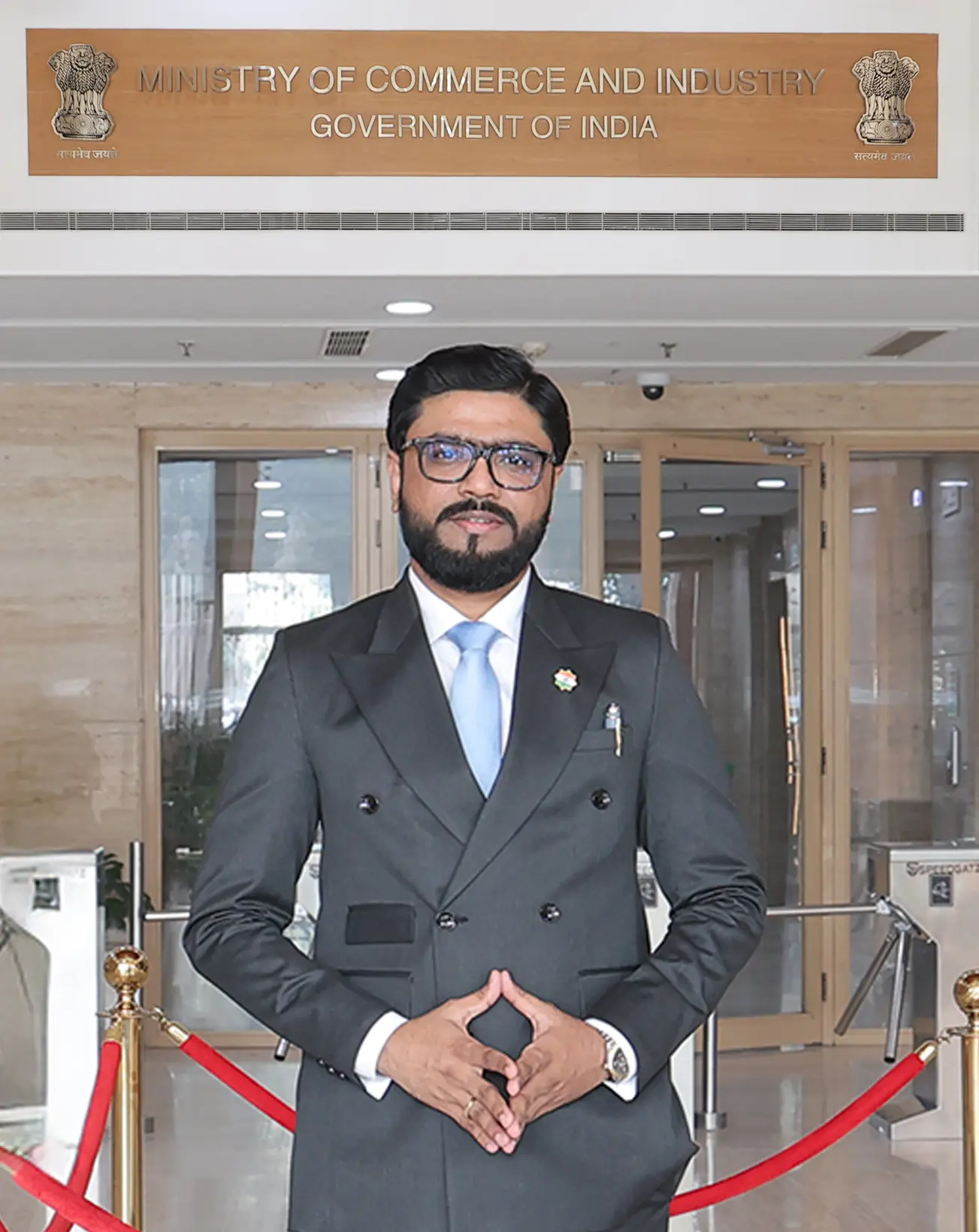
Harsh Patel at SEPC Chintan Shivir: Enabling Global Scale for Indian Professionals
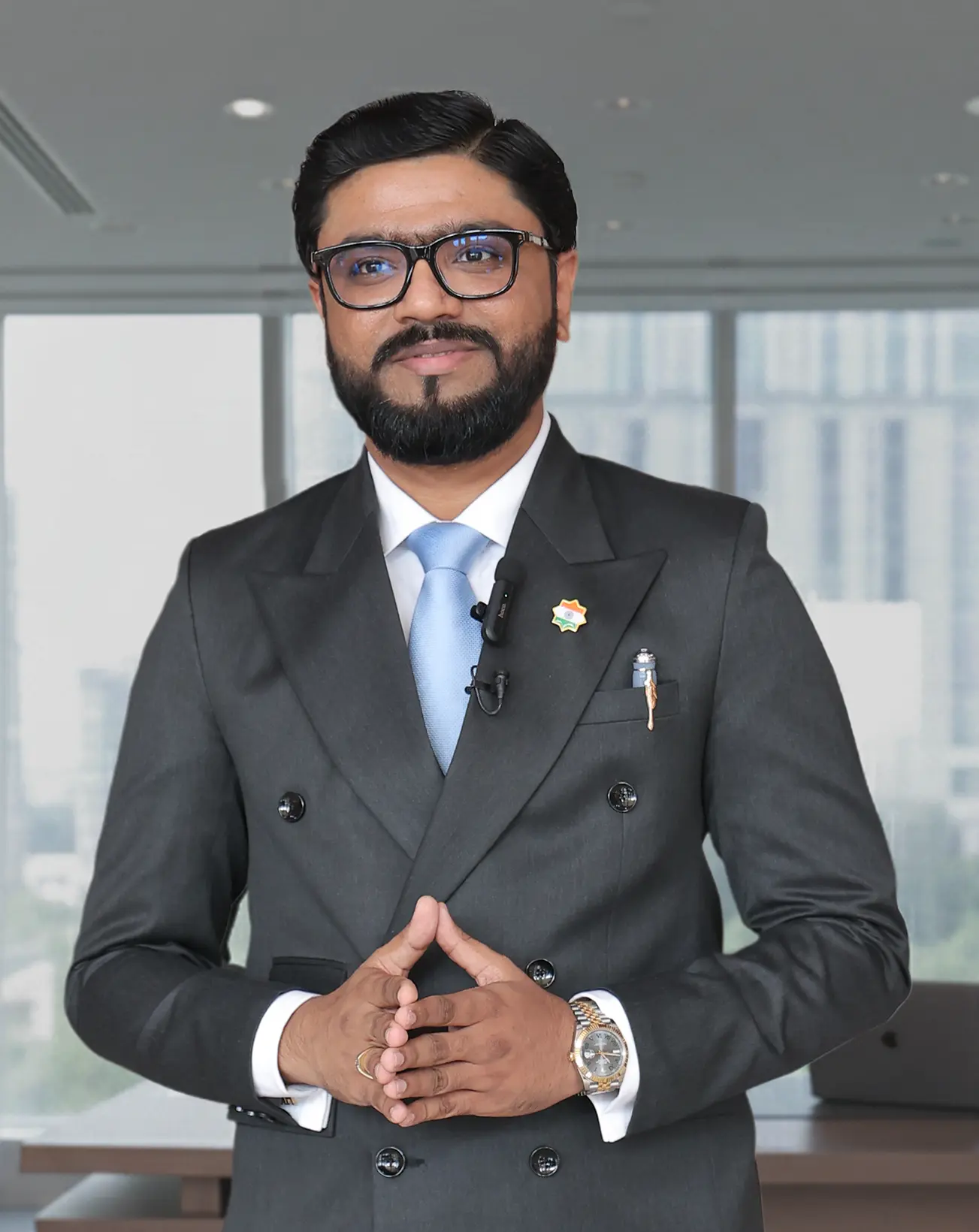
At the Chintan Shivir hosted by the Services Export Promotion Council under the Ministry of Commerce and Industry, Advocate CA Harsh Patel contributed to the session “Expanding Global Horizons: Opportunities for Indian Professionals,” sharing his perspective on India’s evolving role in the global professional services economy.
He highlighted that India’s journey towards Viksit Bharat 2047 will not be driven by talent alone, but by professionals who can deliver trust, governance, and execution across international markets. As businesses expand across borders, chartered accountants, legal professionals, and strategic advisors will play a critical role in building the regulatory, financial, and institutional confidence required for global growth.
His remarks focused on the need to position Indian professional services as a high-value export capability. Beyond compliance and transactional support, Indian professionals must now contribute to cross-border structuring, capital mobility, regulatory alignment, risk management, governance design, and long-term business continuity.
He further emphasised that the global market does not only seek technical knowledge. It seeks professionals who can combine credibility, clarity, accountability, and execution discipline. This is where India has the opportunity to move from being a service provider to becoming a trusted strategic partner for global businesses, investors, and institutions.
The session reinforced a clear message: India’s next phase of global competitiveness will depend on its ability to export not just services, but trust, capability, and institutional excellence at scale.
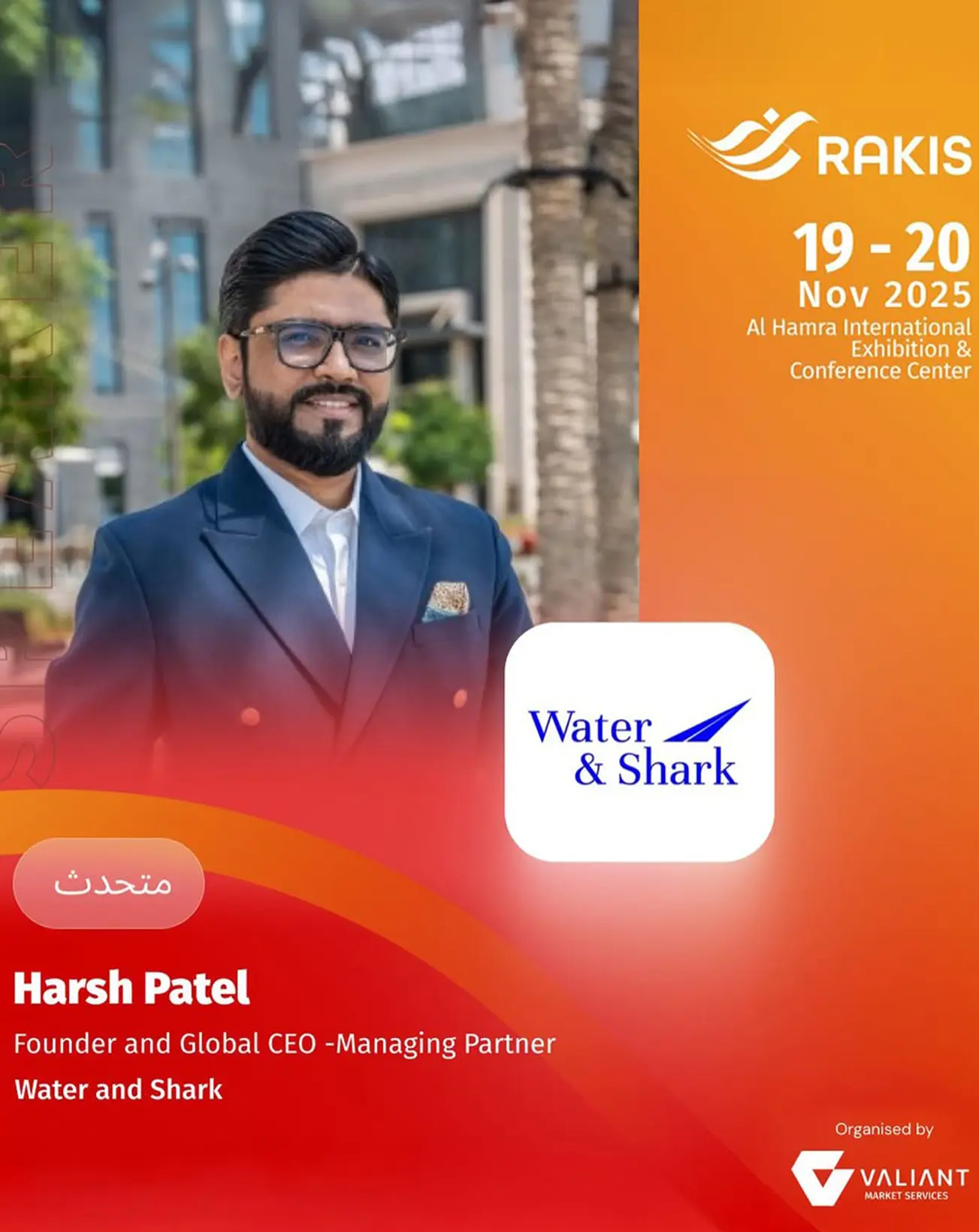
Rethinking Ease of Doing Business: Harsh Patel at RAK Summit
At the RAK Investment & Business Summit, held in Ras Al Khaimah on 19–20 November 2025, Harsh Patel joined global leaders for a panel on “Global Ease of Doing Business,” engaging with the evolving frameworks shaping international investment and enterprise mobility.
Patel contributed a structural perspective on business ecosystems, emphasising that ease of doing business must extend beyond regulatory efficiency to include capital protection, jurisdictional stability, and long-term wealth preservation. He highlighted how forward-looking jurisdictions such as the United Arab Emirates are redefining global benchmarks by integrating policy clarity with investor-centric infrastructure.
The discussion advanced beyond conventional metrics, focusing on how nations can design environments that support not only business formation, but sustained growth, cross-border continuity, and intergenerational capital security.
Patel’s intervention reinforced a clear direction: the future of global business lies in ecosystems that align ease of operation with durability of wealth, enabling enterprises and families to scale, protect, and endure across jurisdictions.
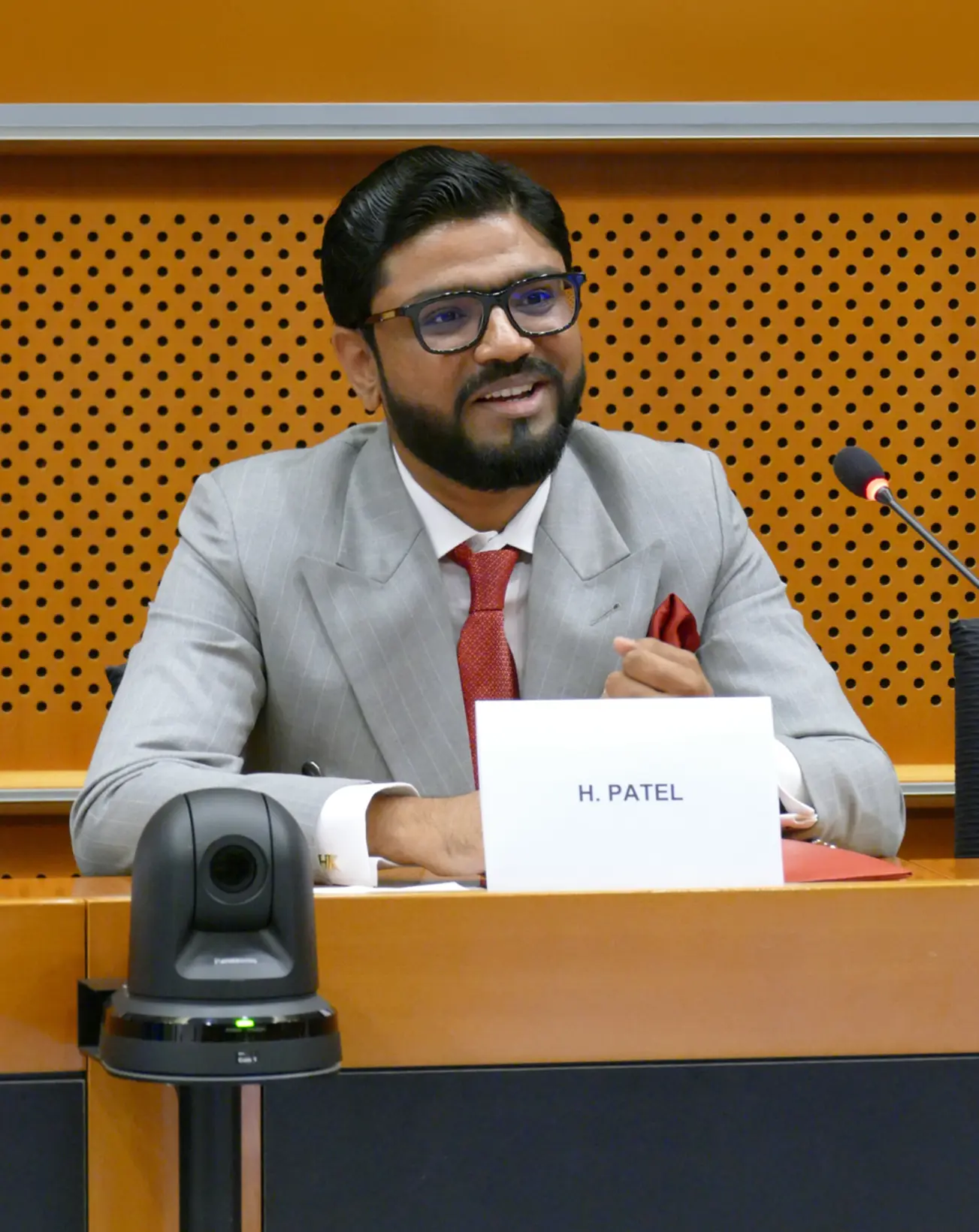
Strategic Convergence: Harsh Patel at the European Parliament
At the EU–India Leaders Conference 2025, hosted at the European Parliament in Brussels on 5 November 2025, Harsh Patel addressed policymakers, entrepreneurs, and global leaders on the evolving trajectory of EU–India relations.
Patel focused on advancing a trust-led, execution-driven partnership, emphasising trade integration, technology collaboration, and institutional alignment as core pillars for the next decade. He outlined the need to move beyond diplomatic engagement toward frameworks that enable businesses to operate seamlessly across jurisdictions.
His address positioned the EU–India corridor as a strategic economic alliance, defined by regulatory coherence, innovation-led growth, and long-term capital flows, reinforcing India’s role as a key partner in Europe’s global economic strategy.
Harsh Patel at the European Parliament - Shaping the India–EU Economic Corridor.
In his comprehensive address at the European Parliament, Harsh Patel presented a strategic roadmap for European Union companies seeking to enter and scale within the Indian market. His session examined the regulatory environment, legal frameworks, fiscal policies and market-entry considerations that are critical for successful business operations in India, with a particular focus on the fast-evolving automobile sector.
He highlighted key opportunities and challenges for EU businesses, including the role of India’s production-linked incentive schemes in supporting new market entrants and strengthening manufacturing competitiveness. He also emphasised the importance of understanding local business practices, building strategic partnerships and maintaining strong legal and regulatory compliance while navigating India’s complex commercial landscape.
His insights on the potential impact of an EU-India Free Trade Agreement positioned the discussion within the broader context of international trade, investment flows and long-term economic collaboration between India and Europe.
The address reinforced Harsh Patel’s expertise in guiding cross-border business expansion and facilitating sustainable international ventures. His strategic perspective offered EU companies a practical framework to engage with one of the world’s fastest-growing economies and unlock long-term growth opportunities in the Indian market.
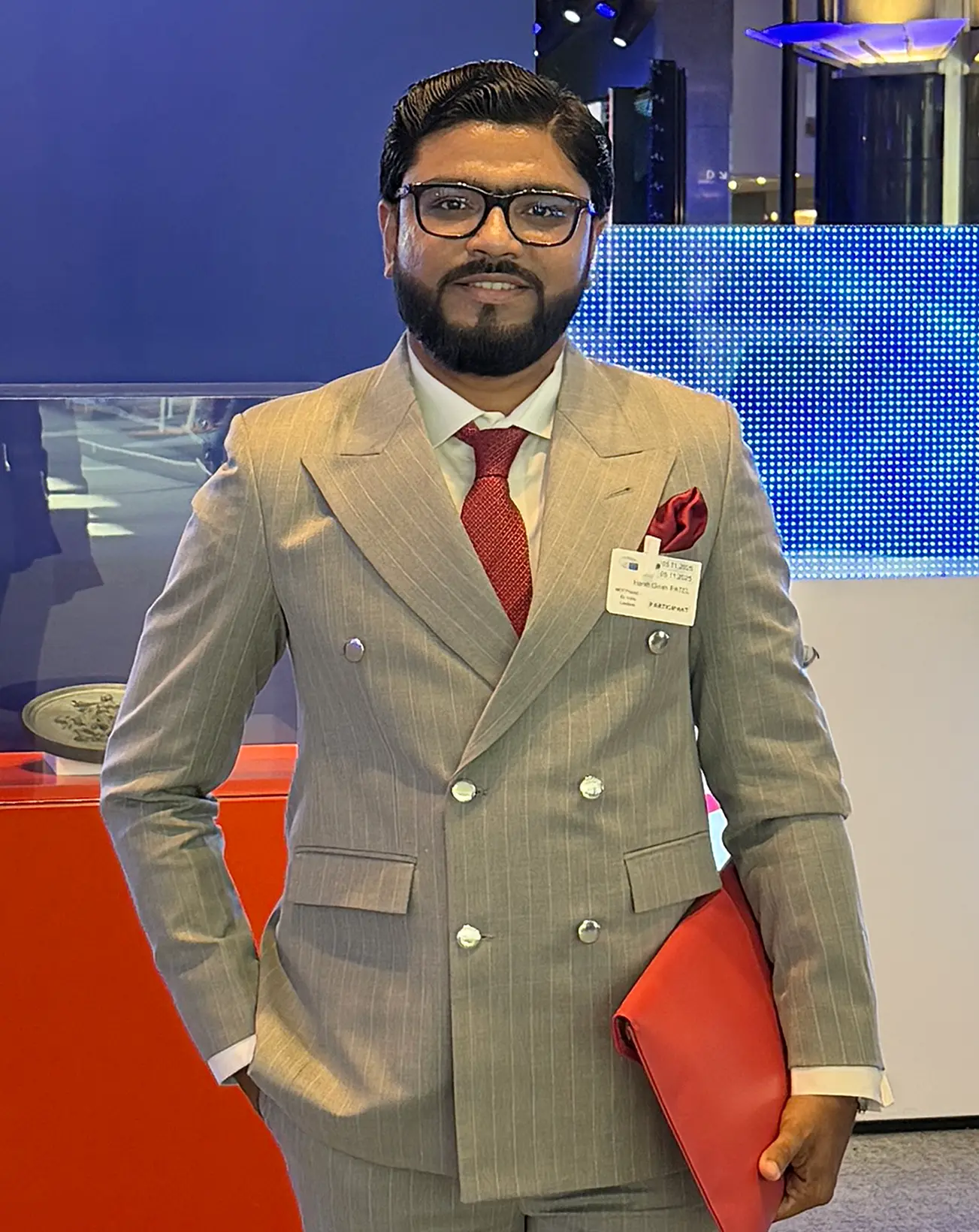
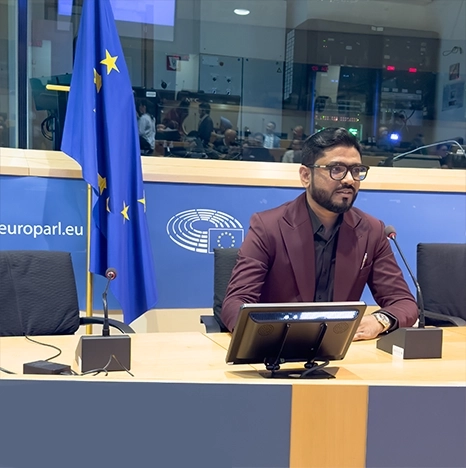
Strategic Insights for Navigating the Indian Market: Harsh Patel at the European Parliament
In his comprehensive address at the European Parliament, Harsh Patel provided a roadmap for European Union companies interested in entering the Indian market. He covered the regulatory environments, legal frameworks, and fiscal policies that are crucial for successful business operations in India, with a focus on the dynamic automobile industry.
Harsh outlined specific challenges and opportunities, including the production-linked incentive scheme that benefits new entrants. He discussed the importance of understanding local business practices and navigating the complexities of the Indian market through strategic partnerships and robust legal compliance. His insights into the potential benefits of an EU-India free trade agreement highlighted the broader implications for international trade and economic collaboration.
This presentation not only equipped EU businesses with essential knowledge but also underscored Harsh’s expertise in facilitating successful international ventures. His strategic advice aims to foster strong, sustainable business relationships between EU companies and the Indian market, emphasizing the significant growth potential within one of the world’s fastest-growing economies.
Harsh Patel Pushes Policy Over Optics in UK Parliament Speech
In Westminster at the India–UK SME Leaders Meeting, Harsh Patel delivered the keynote, shifting the discussion from optics to outcomes. He argued a Free Trade Agreement matters only if it delivers for those building businesses. With 60 million Indian MSMEs near 30% of GDP and 98% of UK firms trading with India being SMEs, he pressed for policy that serves the people who create jobs, technology, and regional stability.
His proposals were specific and investable. He urged allowing Indian startups direct listing on London Stock Exchange’s AIM market, widening capital access and price discovery. He called for India’s £38-billion public procurement to open to qualified UK SMEs, bringing competition and transparency. He addressed capital and talent migration, linking India’s over-regulation and the UK’s inheritance-tax regime to leakage of entrepreneurs, investors, and intergenerational capital.
Crucially, Patel did not merely speak; he helped shape the agenda. He set out FTA-level mechanics: succession planning, recognition of family-trust instruments, and cleaner repatriation—so staying invested locally is preferable to moving assets offshore. The keynote carried weight because it came from execution: adviser to royal offices, unicorn founders, and corporates. The message matched his practice—more substance, and policy that works for builders, boards, and taxpayers everywhere.

Beyond Protection: Insurance as Architecture — Hubbis Wealth Planning & Structuring Forum (Dubai)
In Dubai at the Hubbis Wealth Planning & Structuring Forum, Harsh Patel reframed insurance for HNW families as architecture, not a product. He mapped how PPLI and related structures deliver liquidity, confidentiality, and cross-border tax efficiency while preserving governance and control. Contrasting trusts, foundations, and corporate vehicles with insurance wrappers, he showed when each supports banking relationships, mobility, and succession.
Patel addressed the risks families face: divorce, dispute, and duress. He explained duress triggers, flight clauses, and jurisdictional mobility, and why modern documents must enable rapid redomiciliation without breaking continuity. He treated compliance as design—POEM and GAAR awareness, economic-substance discipline, CRS/FATCA hygiene, and KYC that survives refresh cycles—so structures always remain bankable over time.
His closing message was human and firm: start early, educate continuously, and design for movement—so legacies endure and families keep control.
ICAI Keynotes & Masterclasses: Building Global Practice
Across ICAI conferences, regional councils, and study circles, Harsh Patel delivers practitioner sessions that help members operate globally with confidence. He covers cross-border tax and corporate structuring, FEMA/ODI/FDI pathways, documentation discipline, and board-level communication—always grounded in live casework rather than theory.
Workshops emphasise first principles: align accounting with law, design for regulator-readiness, and write minutes that explain risk, intent, and control. Patel contrasts trusts, LLPs, companies, and foundations for family-office use, banking relationships, and reporting obligations, then addresses POEM, GAAR, transfer pricing, economic substance, CRS/FATCA hygiene, and KYC so files remain bankable through refresh cycles.
For practice builders, he shares checklists, data-room organisation, scoping, pricing models, and quality-management routines; for young members, he teaches how to frame alternatives, present to boards, and convert complexity into decisions directors can adopt.

Empowering Through Innovation: Harsh Patel at TEDx
At a TEDx event, Harsh Patel delivered an insightful exploration into how innovation can transform the fields of accounting and law. His presentation emphasized the integration of cutting-edge technology with traditional methodologies, championing innovation as a catalyst for professional and industry-wide transformation. Harsh discussed practical strategies for professionals to embrace technological advancements, thereby enhancing efficiency and effectiveness in their practices.
His talk encouraged attendees to foster a culture of continuous improvement and innovation within their organizations. By adopting such a proactive approach, professionals can lead from the front, setting new standards of excellence in the global business landscape. Harsh’s persuasive delivery and deep knowledge made a compelling case for viewing innovation not just as a tool, but as an essential mindset for future success in any field.